
The Lost Opportunity Inside Most Nonprofit Board Meetings
Why High-Performing Boards Invite a Different Question


What if the greatest risk facing your organization isn’t the failures your board hears about, but the ones it never does?
Most nonprofit boards spend their meetings reviewing polished updates: goals met, milestones achieved, programs delivered. The highest-functioning board I have ever witnessed did something different.
At every meeting, the expectation was the same. A staff member would open with: Here was our original thinking. Here’s what we tried. Here’s what didn’t work. Here’s what we’re changing because of it.
The board didn’t want polished updates. They wanted honest ones.
This wasn’t accidental. The board had deliberately established that expectation with the executive director and staff. Bring us your hypotheses. Bring us your risks. Bring us your honest results. If the report to the board was all glossy cheerleading, that was the red flag. Not the setback.
The hidden cost of polished reporting isn’t simply that problems stay hidden. It’s that the board never receives the information it needs to contribute its best thinking.
Every board member brings a unique vantage point. One may have navigated a similar strategic pivot. Another may have seen the same challenge emerge in a different organization. Someone else may ask the question that completely reframes the problem. But none of that wisdom is available if the organization only reports what is working.
A culture of glossy cheerleading doesn’t just silence the organization. It silences the board, too.
The most effective boards understand that governance is not simply oversight. It is a two-way exchange of information. The organization brings context, experience, questions, and honest results. The board brings perspective, judgment, networks, and strategic insight. The value of governance lives in that exchange.
When the flow of information is incomplete, everyone operates below their potential.
The Question Beneath the Question
Perhaps you’ve heard the term “intelligent failure.”
I think the concept matters, but what matters even more is the environment that makes it possible.

Intelligent failure is not failing randomly or recklessly. It is designing experiments small enough to generate learning, establishing benchmarks before you begin, and paying close attention to what the results teach you. The goal is not failure. The goal is learning faster than the problem is compounding.
But here’s the challenge: intelligent failure cannot exist in a culture where people are punished for reporting what they learn.
When I shared these ideas recently on LinkedIn, many people agreed with the concept. Others raised thoughtful concerns.
What happens when the word “failure” enters an organization that doesn’t yet have psychological safety? Couldn’t it simply become another label used against people? What about funders who want outcomes rather than experiments?
These are exactly the right questions.
What I’m arguing for is not a culture where leaders point to someone else’s work and declare it a failure. That’s judgment disguised as accountability.
What I’m arguing for is a culture where teams feel safe enough to self-disclose.
To say: Our pilot didn’t meet its benchmark. Here’s what we learned. Here’s what we’re adjusting.
And then hear back from the board: Here’s what we’re seeing from where we sit. Here’s the question we think is worth exploring next.
The distinction matters.
Self-disclosure in a psychologically safe culture is fundamentally different from having someone else’s work labeled a failure from a distance. One treats people as experts on their own work. The other substitutes distance for understanding.
Clear benchmarks help. When success criteria are established before an experiment begins, the conversation afterward becomes less about evaluating people and more about evaluating assumptions. The team isn’t defending itself. Everyone is simply reading the data together.
That doesn’t eliminate accountability. It strengthens it.
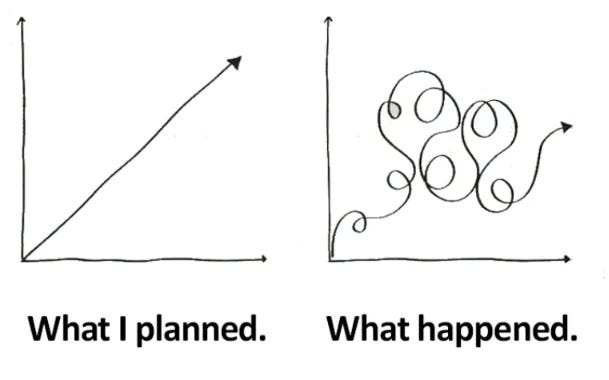
Accountability in a learning organization means being rigorous enough to define what you’re testing, honest enough to report what you found, and disciplined enough to adjust when the evidence points in a different direction.
That’s a higher standard than glossy reporting, not a lower one.
The Board’s Responsibility
The culture described here has to be built from the top down.
The people with the most power in the room carry the greatest responsibility for making it safe to tell the truth.
A board that says it wants honest reporting but responds to it with judgment hasn’t built a learning culture.
It has built a trap.
The first question is not whether staff are willing to self-disclose. The first question is whether leadership has done the work necessary to make self-disclosure genuinely safe.
The organizations I’ve seen do this well tend to follow a few principles:
Fail small. Design experiments narrow enough that what doesn’t work teaches you something specific.
Fail fast. Shorten feedback loops so you learn before committing significant resources.
Distinguish productive failure from reckless failure. A well-designed experiment that disproves a hypothesis is valuable. An initiative with no learning framework isn’t.
Reward candor. If leaders say they want honest reporting, they need to reinforce it when it happens. The Hewlett Foundation offers a playful award for “the worst grant from which we learned the most.” It’s a reminder that organizations don’t become smarter by avoiding mistakes. They become smarter by surfacing lessons quickly enough for everyone to learn from them.
The goal isn’t to fail.
The goal is to learn faster.
Notice that all four practices have the same underlying purpose: keeping information visible. The moment people believe that bad news is dangerous to share, the learning stops and the organization starts flying blind.

What About Funders?
One of the most common objections I hear is practical.
“We don’t have the luxury of experimentation. Our funders want programs, not pilots.”
But small does not mean insignificant. It means learning before scaling.
A pilot is simply a program with honest reporting built into its design.
In many cases, that approach conserves resources because it surfaces what isn’t working before an organization invests heavily in the wrong solution.
And increasingly, sophisticated funders understand this.
Organizations that can explain what they learned from an unsuccessful initiative often inspire more confidence than organizations that report uninterrupted success. A thoughtful pivot demonstrates that leadership is paying attention, responding to evidence, and adapting.
The alternative is far more dangerous.
As Susan Schaefer noted in a comment on one of my recent posts, a board or funder that punishes failure doesn’t get fewer failures. It gets fewer reports of them.
Risk goes underground.
Staff stop raising concerns. Pilots disappear from reports. Challenges get softened. Outcomes become inflated.
Everyone learns the real lesson: managing perception matters more than managing the work.
The learning disappears.
The problems remain.
The Opportunity Hiding in Plain Sight
Every board creates an information culture, whether intentionally or not.
Some create rooms where people learn.
Others create rooms where people perform.
The difference isn’t whether failure occurs. Failure is inevitable in any organization trying to solve complex problems.
The difference is whether people are willing to talk about what isn’t working while there is still time to do something useful with the information.
That’s the opportunity hiding inside most nonprofit board meetings.
Not better dashboards. Not longer reports. Not more polished presentations.
A room safe enough for the truth.
Because when organizations bring their honest questions and boards bring their honest wisdom, governance becomes more than oversight.
It becomes a strategic advantage.
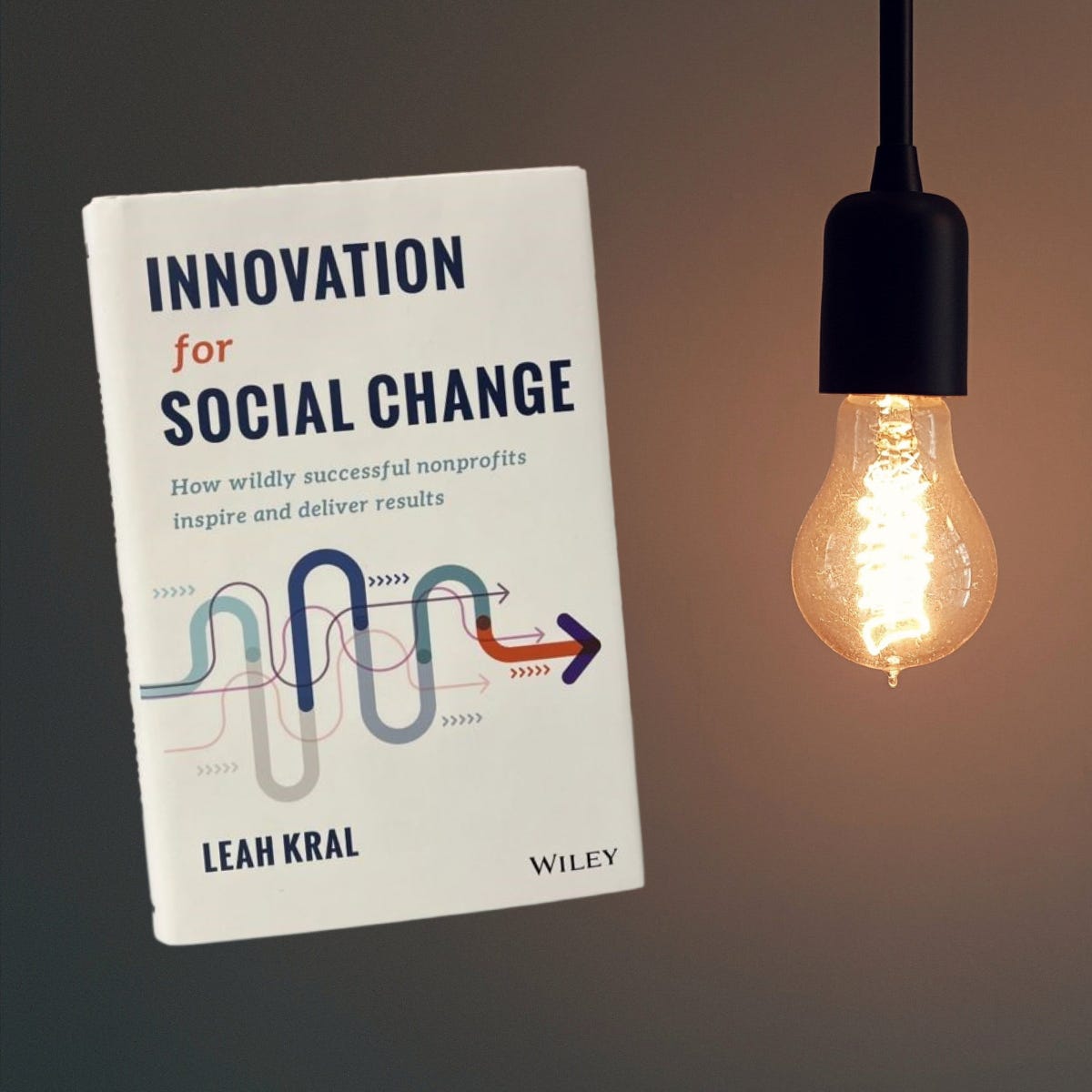
If you’re reading this and thinking, “I want to build this kind of culture, but I’m not sure where to start,” those are exactly the questions I wrote Innovation for Social Change to address. The practices in the book are designed for organizations of any size, budget, or stage of growth.
The room doesn’t have to be perfect to begin.
It just has to be safer than it was yesterday.
How does this land for you? What gets in the way of creating this kind of information culture in your organization?
Leah, I love your pointed, action-oriented guidance. What makes me most suspicious as a board member is a polished presentation. When boards dig into the messy, nuanced situations in front of them, that’s when the real work gets done. Anything less than that indicates an ineffective, indifferent—or worse, negigent—governing body.
Wow, Leah, this is great! How many Boards have I served on that didn’t receive “complete” information because the ED protected him/herself and the staff.
I particularly like creating an atmosphere/culture where the staff can test new programs and honestly review the results to share with the Board. Game changer!