
Is Your Mission Statement Better Posed as a Question?
Why Nonprofit Missions Work Better as Invitations

I’ve spent years facilitating nonprofit strategy sessions using “How might we?” questions. It’s a design thinking technique that opens up possibility - teams that walk in stuck on one solution suddenly see ten paths forward.
But recently, something clicked: If “How might we?” questions are so transformative for strategic planning, why don’t we use them for the most strategic statement of all - our mission?
And here’s the deeper truth I keep bumping into: Every nonprofit is fundamentally a hypothesis. We’re all testing theories about how to solve problems in the world. Yet most mission statements are written like we’ve already proven the theorem.
Most organizations state their mission like this: “We make the world a better place through accessible design for people with disabilities.”
Bold. Confident. Done.
But what if we reframed it as: “How might we make the world a better place through accessible design for people with disabilities?”
The Shift That Happens
· It acknowledges reality. You’re striving toward something, adapting along the way, discovering what works. Every nonprofit is essentially a hypothesis about how to solve a problem - we’re all figuring out what works.
· It signals humility. You’re not claiming to have arrived. You’re on the journey, learning as you go.
· It invites collaboration. A question opens the door for others to join, contribute ideas, and co-create solutions.
· It sparks curiosity. Questions invite exploration rather than closing down conversation.
It transforms your mission from a finished product into a living invitation.

What This Actually Looks Like
To experiment with this idea, I tried reframing some well-known missions as questions:
🏥 Doctors Without Borders: How might we deliver lifesaving medical care to people most in need, wherever crises occur?
🌍 Patagonia: How might we conduct business in ways that protect and restore our planet?
🎓 Khan Academy: How might we provide free, world-class education to anyone, anywhere?
When Doctors Without Borders asks, “How might we deliver lifesaving medical care to people most in need?” they’re not confused about their mission. They’re acknowledging that the HOW keeps evolving.
What do you think? What strikes me is that the question makes space for breakthrough innovations they haven’t imagined yet.
What This Means for Fundraising
Here’s what I’m curious about: will organizations that frame their work as ongoing questions rather than solved problems build deeper donor relationships? People don’t want to fund maintenance. They want to fund discovery.
When your mission is a question, every gift becomes an investment in finding better answers. Donors become collaborators in an unfolding story, not just supporters of an established program.
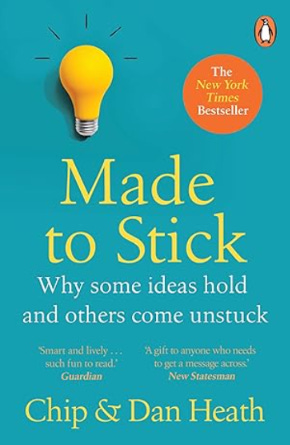
For example, Chip Heath and Dan Heath write in their bestselling book Made to Stick about the power of posing a curious question that draws an audience in, like a fascinating mystery to be solved. Your mission provides a similar opportunity. Not just to inform, but to invite.
One of my readers shared that he is noticing something shifting in the corporate social responsibility sector: companies no longer want simple donation-logo relationships. They want to solve problems together with their ecosystem of partners, employees, customers, and communities.
💡 When you frame your work as a question, you signal something valuable to potential partners: We’re curious. We’re learning. We have room for your perspective and contribution.
Donors increasingly want to be co-creators, not just checkwriters. The question format invites them into the work differently. Think about the difference:
· “We provide literacy programs” → Here’s what we do. Support us.
· Or, “How might we increase literacy rates in our community?” → Here’s what we’re solving. Help us figure it out.
One asks for money. The other asks for partnership.
Why Don’t More Organizations Do This?
If this approach is so powerful, why don’t we see mission questions everywhere?
Most organizations default to declarations because that’s what we’ve always done. Mission statements reassure stakeholders. A question can feel risky, like admitting uncertainty. Won’t a question format make us seem less credible to foundations or major donors who want proven solutions?
But there’s a difference between honest inquiry and lack of direction.
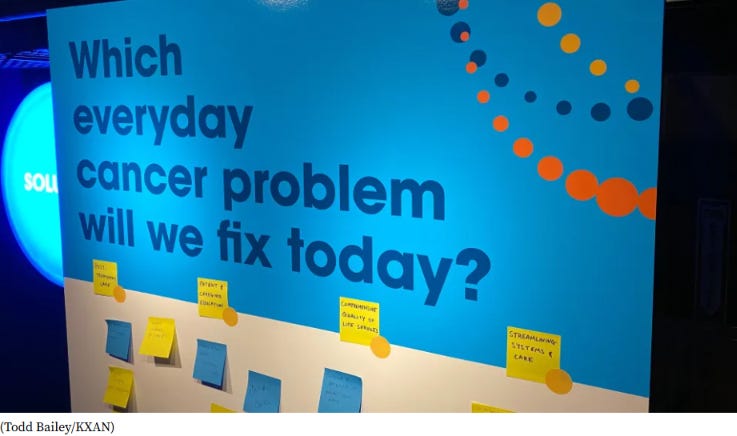
Consider the nonprofit Livestrong, which serves cancer survivors. They’ve embraced a mission question: ‘Which everyday cancer problem will we fix today?’ This isn’t uncertainty - it’s a commitment to staying grounded in real needs rather than abstract goals. Every cancer journey is different, so their question format signals exactly what they offer: We listen first, then adapt.
The barrier isn’t that questions don’t work. It’s that we haven’t given ourselves permission to try them.
My Own Mission Question
I’ve been thinking about this for my own work too. My personal passion and professional mission have always been guided by this tagline, “Igniting Innovation for Greater Social Impact.” Yet reframing it as a question creates a new energy: “How might we ignite innovation for greater social impact?”
This is the foundation for my writing, speaking, and consulting work, but explicitly inviting others into this journey with me is even more exhilarating. This is a burning question for our sector - and one I’ll never solve alone. We’re going to figure this out together. That’s the invitation I want to extend - whether to readers, audience members, or clients.
What I’m Still Wondering
Here’s what I noticed when I first posed this question to nonprofit leaders: It immediately generated dialogue. People started thinking differently about their own organizations. Some pushed back on the concept, which led to deeper exploration of what missions are actually for. The question did its job. It opened a door.
The same thing happens in my strategy sessions. When a team shifts from defending their current approach to exploring “How might we?” questions, the energy in the room changes. People lean in. New possibilities emerge.
Maybe that’s what our sector needs most right now - not more certainty, but better questions.
So, I’ll leave you with this: What’s your organization’s core purpose? How would it sound as a “How might we?” question? And what might open up if you invited your donors, partners, and community into that question with you?
You don’t have to change your official mission statement tomorrow. But try the question on. See what shifts. I’d love to hear what you discover.
Love this!! A great consideration!
It's an interesting idea, Leah. On the fund development side, I'm thinking about how individual investors might receive this messaging as compared to institutional ones. I wonder how a mission phrased as a question might strike foundations' aversion to risk. If an organization is considering this shift, it might benefit from floating the draft mission with some trusted funders and gauging their input.